
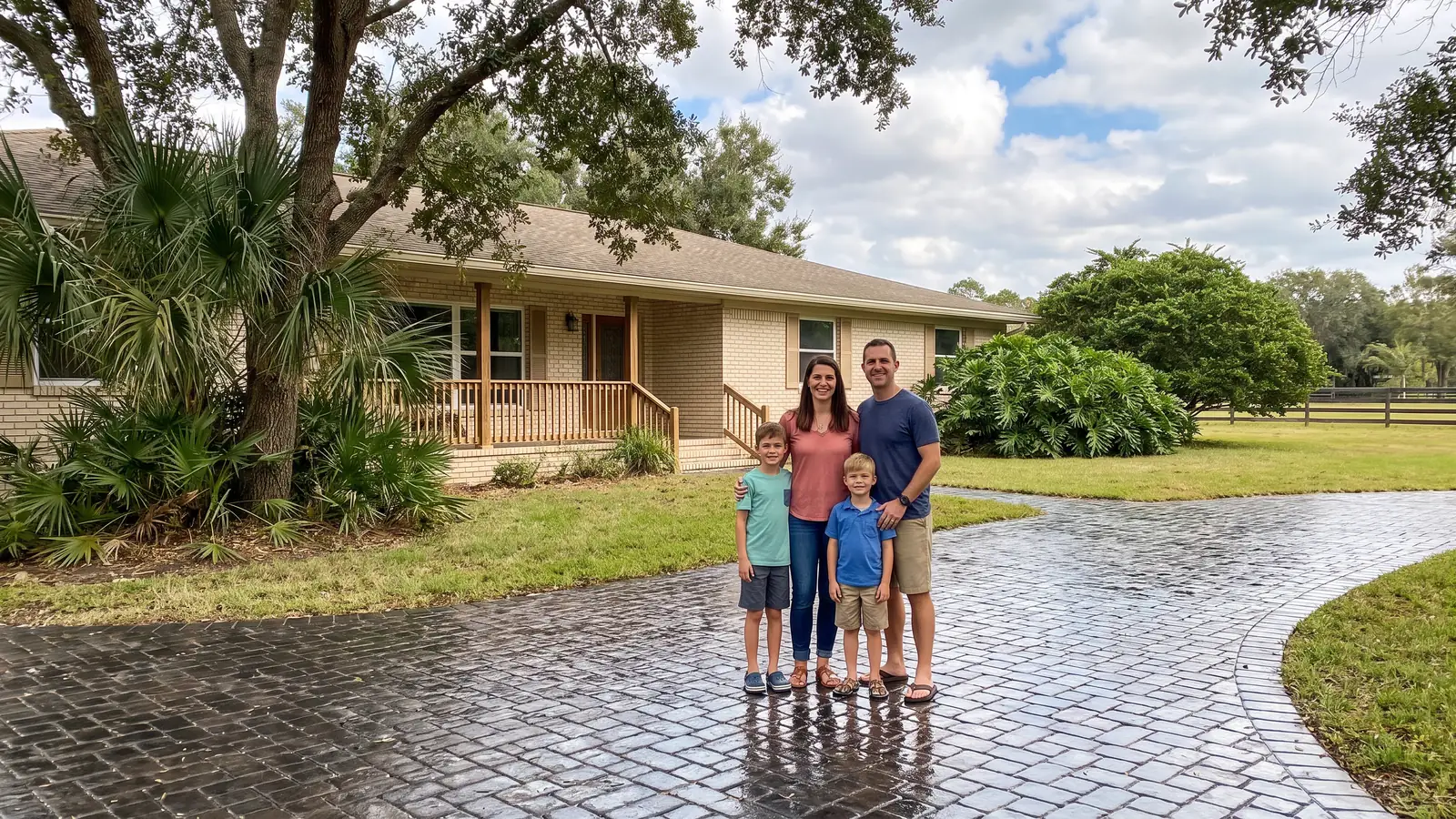
Paver sealing for San Jose homes
Paver Sealing in San Jose, FL
Under the oaks of San Jose, pavers get a free sealing estimate when you call (904) 569-9619.
- Brings out deeper paver color
- Fresh joint sand helps lock pavers in place
- Gives weeds less room to grow
- Makes the surface easier to keep clean
- Free estimate, no obligation
Request a Free Estimate
Free, no obligation.
Fast, careful paver sealing in San Jose
Paver sealing in San Jose is handled by a local contractor, from the oak-lined blocks near San Jose Boulevard to the Epping Forest side by the river. The pavers are washed, re-sanded and sealed, with a free estimate to start. Ring (904) 569-9619 and a reply comes within 1 business day, usually much sooner.
Picture a front walk gone green under a live oak, with acorn stains and thin joints. After a wash, new sand and a fresh coat, the pavers go back to one clean color. When you are ready, you can ask for a free estimate and describe the shade and the surface.
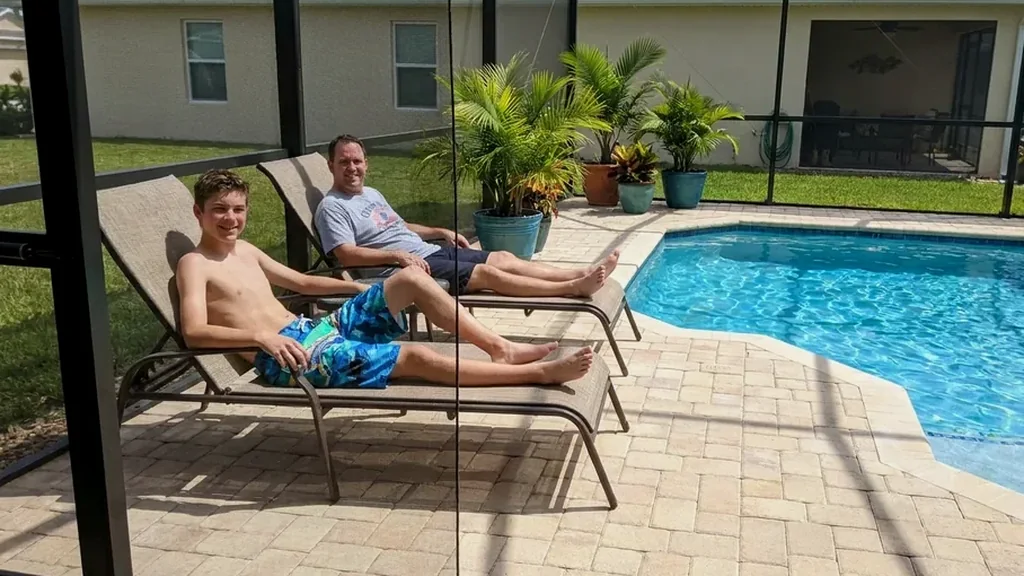
Why hire a local paver sealing contractor in San Jose?
San Jose has deep oak shade, older homes and a river on one side, so pavers here live a different life than in a new subdivision. A local contractor can plan around all of it, so call (904) 569-9619.
A free look first
A contractor looks at your San Jose pavers and gives a price, free. You choose afterward.
A range worth knowing
Companies commonly publish $1.75 to $3.25 per square foot to clean, sand and seal. Test any San Jose price against it.
Care around older houses
Spanish Revival and midcentury homes both sit beside pavers here. Rinse water stays off stucco, wood and plantings.
Gates and city rules, sorted
Epping Forest is gated, and some lots sit in historic districts. Mention both on the first call so the date holds.
Get Your Free Estimate in San Jose
Tell us about your pavers in San Jose.
Free, no obligation
What paver problems show up most in San Jose?
Oak shade, moss and acorn stains
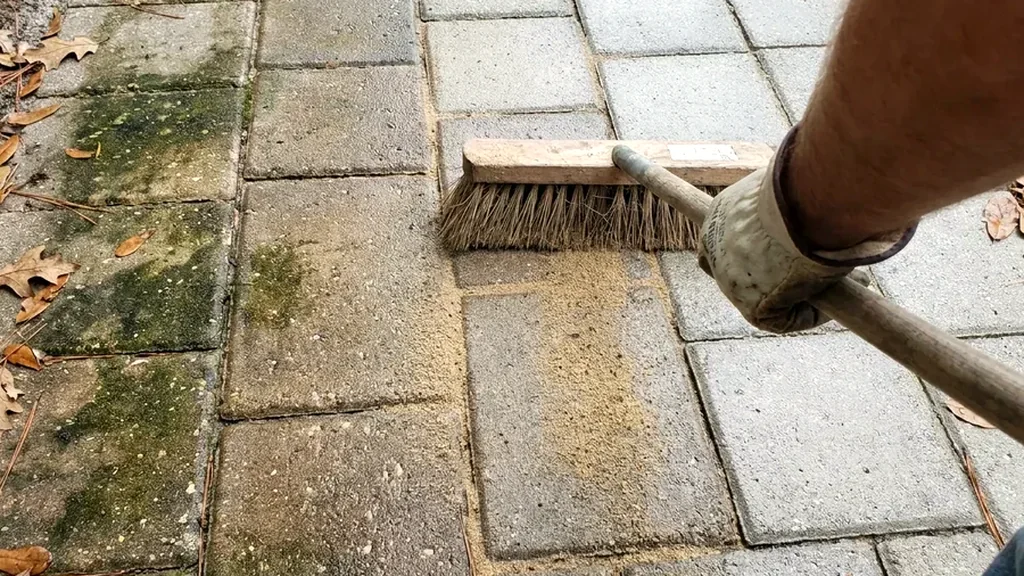
UF/IFAS says live oaks spread 60 to 120 feet, and Wikipedia describes most San Jose lawns as shaded by large oaks with draping moss. Water oak acorns stain concrete where they fall. Shade keeps pavers damp, which is where green algae tends to grow. Sealer cannot trap that film, so the wash comes first, and a sealed surface holds dirt and algae more loosely afterward. If your walkway sits beside a live oak, the shade may never lift, so plan on cleaning it again before the next coat is due. Spanish moss and leaf litter hold moisture against the surface too. Leaf and acorn fall also collects in joints, which is one more reason sealing pays off under heavy trees.
Water from the river and heavy storms
Near Jacksonville the St. Johns River is an estuary with a strong tidal influence, and a nor'easter can raise the water several feet. San Jose runs along the river's east bank. Low waterfront lots may see standing water, which leaves a film on pavers and pulls out sand. A contractor wants to know if your lot has taken water before. The estuary is open to the ocean, so a storm far offshore can still push water up the river. After any flood, the pavers are washed and dried before sealing, not during. Goodbys Creek, which roughly divides San Jose and Mandarin, is another low edge of the neighborhood.
Sand that rain pushes out of joints
The USDA describes the Ortega soil series, found in Duval County, as deep, moderately well drained sand. Rain totals about 52 inches a year across Jacksonville, and brief, hard summer storms deliver much of it. Joints lose sand, soil settles in and weeds follow. Fresh sand goes back before any coat. Open joints also let the pavers shift under a car, and ants move in with the weeds. Refilling is part of every San Jose job. Sand loss is easiest to spot after a heavy storm, when gaps show along the edges.
Different ages and unknown old sealer
San Jose has Mediterranean Revival homes from the 1920s, postwar ranches from the 1947 re-platting and newer builds, so pavers here were laid over many decades. One Jacksonville company reports that roughly one job in five to ten needs an oil-based coat stripped. Sealers do not mix, and a water-based one will not go on top of a solvent-based one. Before choosing a product, the contractor learns what is on the surface. Pavers beside a stucco wall or a wood porch need careful rinsing, since the same wash that cleans the pavers can mark the house. Ask the contractor how they protect it. The 1947 re-platting by Stockton, Whatley, Davin and Co. filled the undeveloped parts with postwar subdivisions, so ranch-era driveways sit beside 1920s courtyards.
Sunken pavers and weak edges
One local sealing company names sinking and washouts as the main reason pavers fail. A paver maker says a weak or poorly compacted base is a leading cause, and drifting pavers point to missing edge restraints. Sealing does not fix any of that. Low spots are repaired first because a coat locks in whatever is there. Dips near a downspout or beside a tree root are worth pointing out when the contractor visits.
Do San Jose's historic rules and gated communities change a paver job?
The City of Jacksonville requires a Certificate of Appropriateness for exterior work on properties in local historic districts and on landmarks, and it lists driveways as an example. Six houses on Via de la Reina joined the National Register of Historic Places in 1985. You can search your address on the city's Land Development Map. Check it before you ask for a free estimate.
Gates matter too. Epping Forest is a gated community of about 90 homes and 80 condominiums on the riverfront. A Southside paver page says a guard gate can cap the hours and vehicles a contractor may bring, so tell the company about gates and visitor lists when you call (904) 569-9619.
San Jose homes range from waterfront mansions to small wood-frame starters, with Spanish Revival bungalows and midcentury ranches in between. The Villages of San Jose, from the 1980s, stands where the Beauclerc Country Club once was. Pavers beside stucco or wood call for careful rinsing. Say which style of home you own when you ask for a free estimate.
What does paver sealing cost in San Jose?
Across the First Coast, published prices commonly run $1.75 to $3.25 per square foot to clean, sand and seal. A shaded San Jose walkway that needs extra cleaning sits higher in the range, and a big open driveway sits lower. A walkway or courtyard gets measured in with the driveway. For a price on your San Jose pavers, ask for a free estimate.
Old failed sealer, lost joint sand and sunken sections all add work. Prep is the big block of time, with one Jacksonville company putting it at 2 to 3 hours per hour of sealing. Gate rules that shorten the workday can stretch a job. Call (904) 569-9619 to hear which of these apply at your address.
| Paved area | Typical example | Clean, sand and seal |
|---|---|---|
| 300 sq ft | Small patio or walkway | $525 to $975 |
| 600 sq ft | Two car driveway | $1,050 to $1,950 |
| 1,000 sq ft | Large driveway or pool deck | $1,750 to $3,250 |
| 1,500 sq ft | Driveway plus pool deck | $2,625 to $4,875 |
Math based on the $1.75 to $3.25 per square foot that Northeast Florida paver companies published as of November 2026. Your contractor sets the actual price after seeing the surface. Repairs, leveling and stripping failed sealer are usually extra.
How does a paver sealing job work in San Jose?
Walk the lot and check the gate and the history
The contractor looks for sunken spots, shaded damp areas and any old sealer. They ask about guard gates, visitor lists and whether your home sits in a historic district. A low or lifted section gets repaired first. Mention any past high water on your lot too. Pricing follows this visit, and no work is agreed before it. Photos of the problem areas help when you call. A walk around shows which spots stay shaded and damp.
Wash off algae, acorn stains and grime
Cleaning clears the green film from shaded walks and the dark marks where oak acorns fell. Stucco, wood trim and plant beds are kept clear of rinse water, which matters beside older San Jose homes. Washing also pulls sand from the joints. Some stains need extra treatment to lighten. If a stain will not lighten after the first pass, the contractor tells you before moving on.
Put new sand back between the pavers
New sand goes into the joints so the pavers lock together again. If you want the seams to blend in, ask about colored sand. The sand stays put better under a sealed surface. The pavers are swept clean when the joints are full. If joints have sat open for years, expect this stage to take longer.
Let the surface dry
Sealing damp pavers is behind most white or blotchy coats. Under San Jose's oaks a walkway can stay damp long after a sunny drive has dried. The contractor waits for a dry surface and a dry forecast. Summer storms are the usual reason a date slides. A good contractor checks the surface, not just the clock, before sealing.
Apply sealer and let it cure
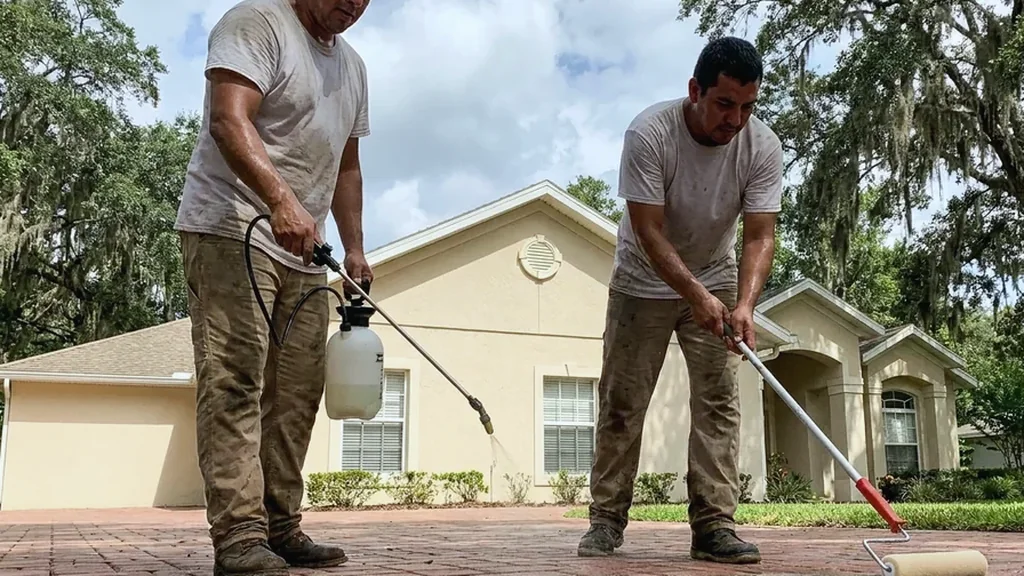
A trade guide says to spray the first coat and then back-roll it with a slit foam roller. Wet look gives deeper color, while matte holds the natural appearance. Feet are welcome after a few hours, but cars wait a full day. Many companies put a recoat at two to five years out. Ask the contractor how you will know when the next coat is due.
Complete paver services in San Jose
The work runs in order: repairs, wash, new sand, dry time, then sealer. Nothing dirty is left under the coat, which matters on pavers that live in shade. The dry wait can stretch under oaks. Call (904) 569-9619 to ask how it would go on your lot.
Front walks, driveways, courtyards and rear patios all show up in San Jose. Walks under live oaks go green and pick up acorn stains, and drives collect tires and oil. Courtyards beside a wall stay damp when the sun is blocked. Name the surfaces you want done when you ask for a free estimate.
Film-forming sealers sit on top and stabilize joint sand, while penetrating ones soak in and leave the look unchanged. Wet look deepens color, and matte stays closer to bare pavers, which suits an older front. Start by finding out what is already on the surface. Call (904) 569-9619 for help choosing.
Shade slows drying, and Jacksonville's May to September storms slow it more. Gated communities can limit work hours as well. Plan on a flexible date and a dry forecast. To find a day that works, ask for a free estimate.
Questions to ask before you hire
- What does the estimate list besides the price?
- How do you protect my plants and landscaping from the cleaner?
- Will you tell me when the pavers should be sealed again?
- Will the sealer leave a wet look or a flat natural finish, and can I choose?
- Do you charge extra for a pool deck, a lanai or steps?
- What happens if it rains within a day of the job?
- Can I see a sample of the finish before you start?
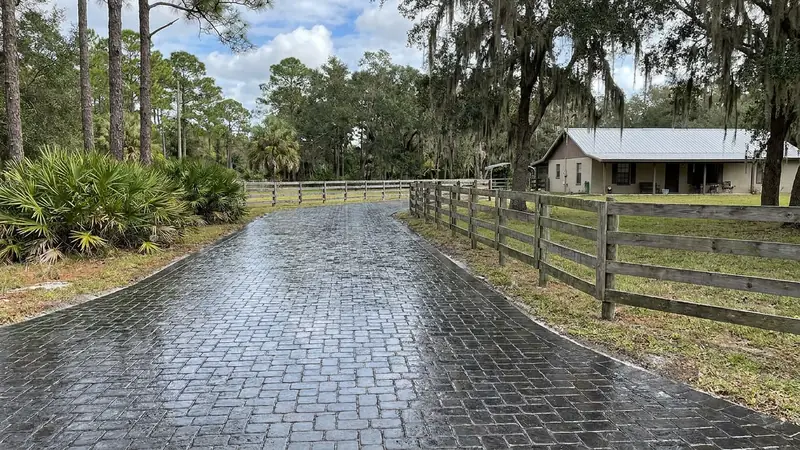
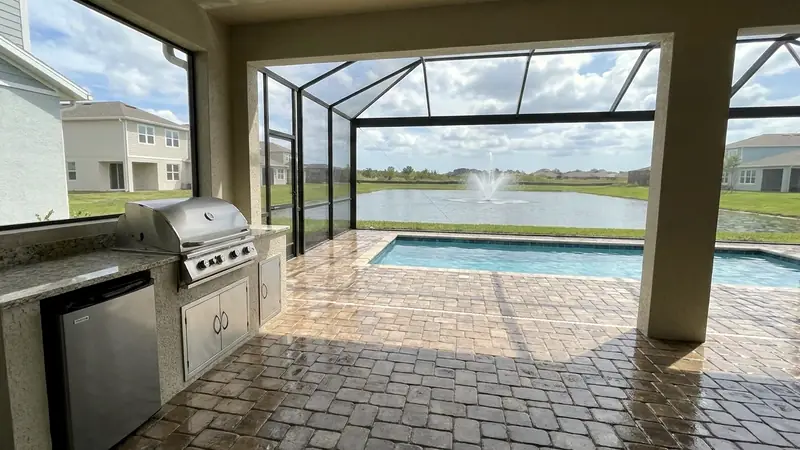
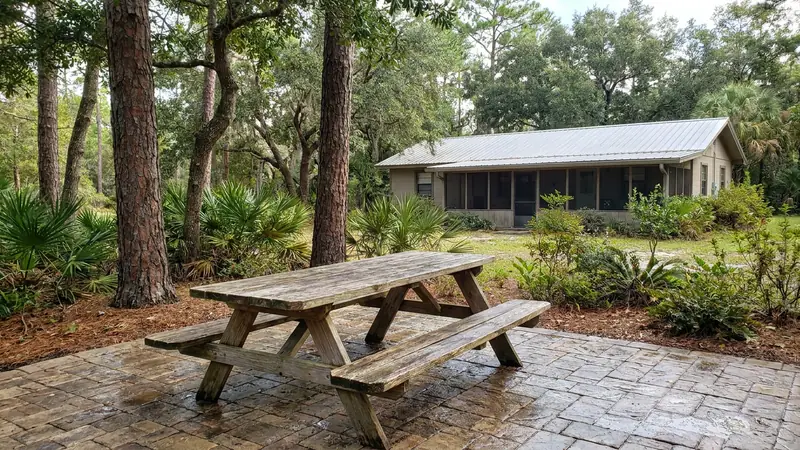
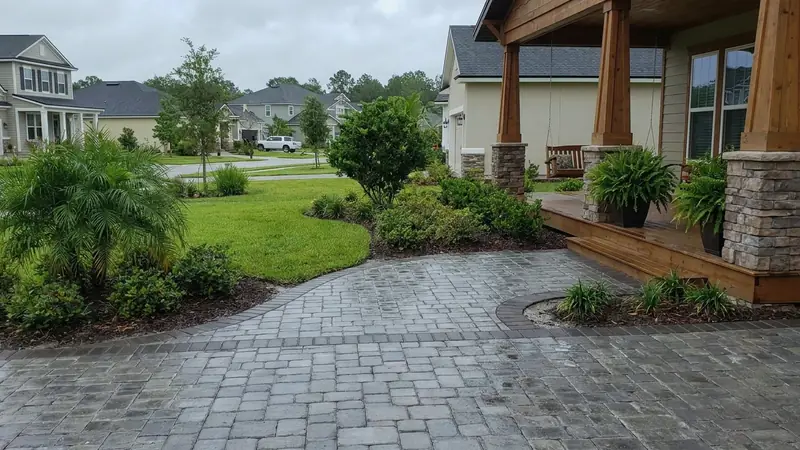
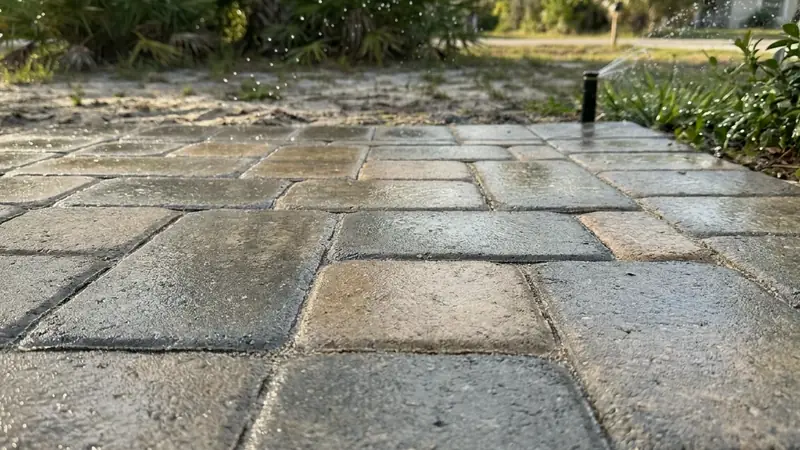
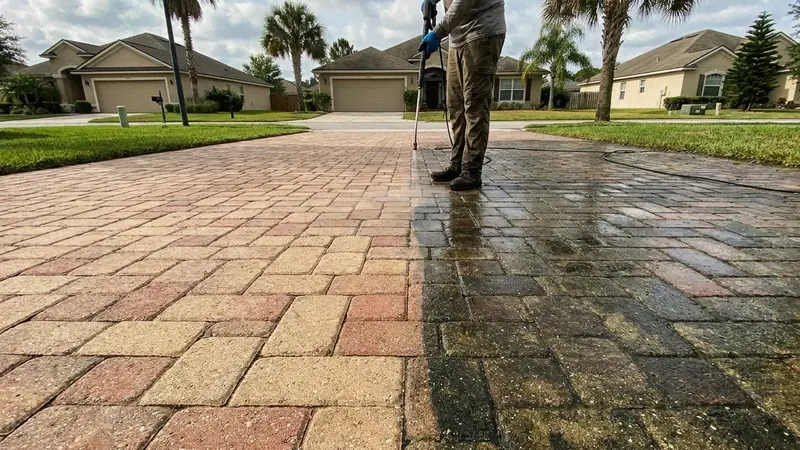
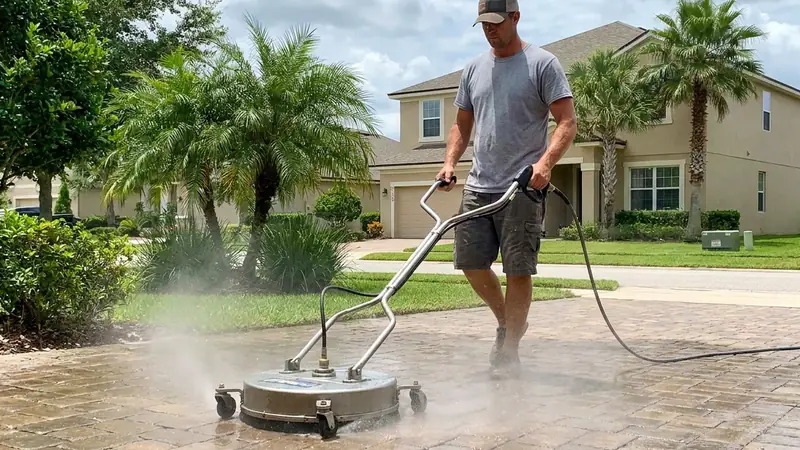
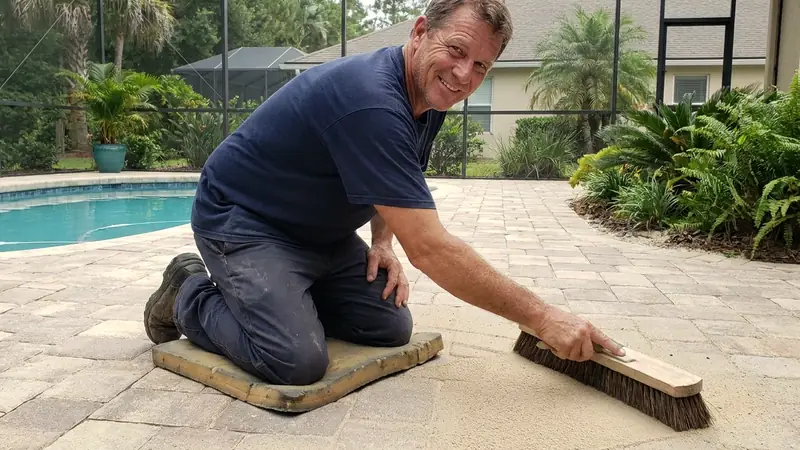
What do sealed pavers look like around San Jose?
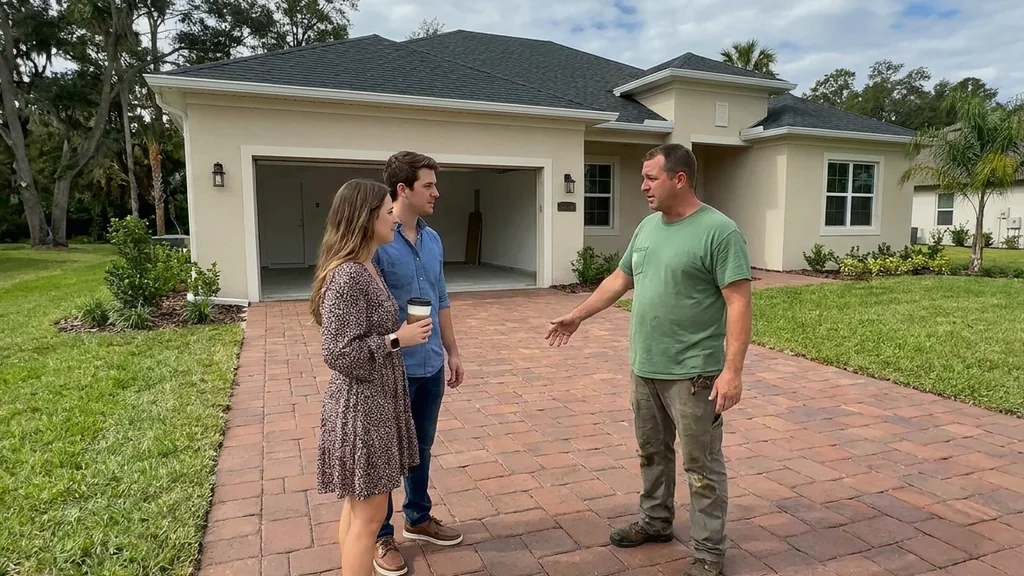
Why local matters in San Jose
San Jose lots are not alike. A riverfront property off San Jose Boulevard, a Spanish Revival bungalow and a 1980s townhome each need their own plan. Someone from across town may not ask about gates or river water. To speak with a contractor who works San Jose, call (904) 569-9619.
Trees are the next factor. Hurricane Irma in 2017 left almost every street along San Jose Boulevard near the country club with trees down. Big oaks mean heavy shade and heavy leaf and acorn fall, which a local contractor plans for. To ask how, ask for a free estimate.
Then there are the rules. Someone who has worked Jacksonville's historic areas knows to check the Land Development Map and ask about a Certificate of Appropriateness. That avoids surprises after work begins. If your home is near the old Estates, ask for a free estimate and share the address.
How did San Jose Estates shape the neighborhood today?
It started as a 1920s planned community. The charter came on January 25, 1925, John Nolen laid out radial streets named for Spanish cities, and Donald Ross designed the golf course. The first phase sold out by August 10, 1925, but only 31 homes stood by 1928. If you live near Plaza del Sanchez or the San Jose Country Club, call (904) 569-9619 and give your street.
After the land boom the area filled in slowly. The San Jose Hotel opened on New Year's Day 1926 and has housed The Bolles School since 1933, and 21 original Mediterranean Revival residences remained in 2025. I-95 later drew growth east and kept San Jose mainly residential. Close to Goodbys Creek Preserve or Epping Forest, a request through ask for a free estimate gets the conversation going.
Frequently Asked Questions
Is it good to seal pavers in the shade of San Jose's oaks?
Yes, in most cases. A Jacksonville paver company says unsealed concrete pavers lose color noticeably in 3 to 5 years of sun. Sealing holds color and joint sand, and it makes later cleaning easier, which helps pavers under San Jose's oaks. A clean, sealed surface also looks even beside older stucco and brick.
What is the average cost to seal pavers in San Jose?
Across the First Coast, published prices commonly run $1.75 to $3.25 per square foot to clean, sand and seal. When the old coat has failed, stripping it first raises the total. Have the quote show the total area so you can check it against that range. Count every surface you want done, since each adds to the total.
Is it better to spray or roll paver sealer on San Jose pavers?
Many pros do both. A trade supplier advises spraying the first coat, then back-rolling with a slit foam roller to lift excess from the joints. Rolling alone can leave lap marks, so ask the contractor how they apply it. Ask which method the contractor uses on textured pavers, since too much product can pool.
Why is paver sealing so expensive in San Jose?
Prep takes up most of the cost. Washing shaded pavers, replacing sand, repairing low spots and stripping old sealer all come before the coat. Gates that limit working hours can stretch the schedule.
Do I need city approval to seal pavers in a San Jose historic district?
It depends on your address. Jacksonville requires a Certificate of Appropriateness for exterior work in local historic districts and on landmarks, and it names driveways as an example. Look up your address on the Land Development Map and ask city staff first. A COA stays valid for one year, and for five years once work has begun, per the city. Not every address is in a district, so a quick look saves a surprise.
Do guard gates in San Jose affect a sealing job?
They can. A Southside paver page says a guard gate can cap the hours and vehicles a contractor may bring. Tell the contractor about the gate and your visitor list when you ask for an estimate. Giving the guard house a heads-up on the work day also helps. A short heads-up to the guard house on the work day also helps.
Will sealing stop green film and acorn stains under my oaks?
It will not stop them, but it helps. A Jacksonville paver company says dirt and algae grip a sealed surface less, so later cleaning is easier. Oak shade and acorns still arrive, so expect cleaning from time to time. Cleaning gets easier after sealing, but it does not disappear.
Can new sealer go over the old coat on my San Jose pavers?
Not always. Water-based sealer cannot go over solvent-based sealer, and one Jacksonville company strips an oil-based coat on roughly 10 to 20 percent of its jobs. Someone has to identify the old product before anything new is applied. Keep any old receipts or product names. If the old coat is peeling, patchy or cloudy, that is a clue it needs attention first.
Nearby areas we serve
Ready for a Free Estimate in San Jose?
Call (904) 569-9619 and tell us about your pavers.
Free, no obligation